Sea Buckthorn Research: Scientific Studies on Its Antioxidant and Omega Nutrients
Evidence Supporting the Nutritional Properties of Sea Buckthorn
Sea Buckthorn (Hippophae rhamnoides L.) has been widely studied for its complex nutritional composition and biological activities. Modern phytochemical research has identified more than 190 bioactive compounds within the berry, including polyphenols, carotenoids, flavonoids, phytosterols and essential fatty acids.
These compounds contribute to the antioxidant activity and nutritional value of Sea Buckthorn, which has attracted increasing interest from researchers studying natural plant-based ingredients for metabolic, cardiovascular and skin health.
For a comprehensive overview of the nutritional properties of this botanical superfruit, visit our educational article:
Sea Buckthorn Benefits – Antioxidant Superfruit Rich in Omega 3 6 7 9
https://nutriog.com/pages/sea-buckthorn-benefits-antioxidant-superfruit-rich-in-omega-3-6-7-9
Research Highlights
Scientific studies across multiple disciplines have identified the following biological properties associated with Sea Buckthorn.
| Research Area | Observed Findings |
|---|---|
| Antioxidant Activity | High polyphenol and carotenoid content contributes to strong antioxidant capacity |
| Lipid Metabolism | Studies suggest potential support for healthy cholesterol metabolism |
| Skin Barrier Support | Omega-7 fatty acid contributes to skin hydration and epithelial repair |
| Anti-Inflammatory Properties | Flavonoids may influence inflammatory pathways |
| Nutrient Density | Over 190 bioactive compounds identified |
These findings have contributed to Sea Buckthorn’s recognition as a functional botanical ingredient in nutritional research.
Phytochemical Composition
Sea Buckthorn berries contain a wide spectrum of bioactive nutrients.
| Compound Group | Key Components |
|---|---|
| Fatty Acids | Omega-3, Omega-6, Omega-7, Omega-9 |
| Polyphenols | Quercetin, Isorhamnetin |
| Carotenoids | Beta-carotene, Lycopene |
| Vitamins | Vitamin C, A, E, K |
| Phytosterols | Beta-sitosterol |
Bioactive Composition Chart
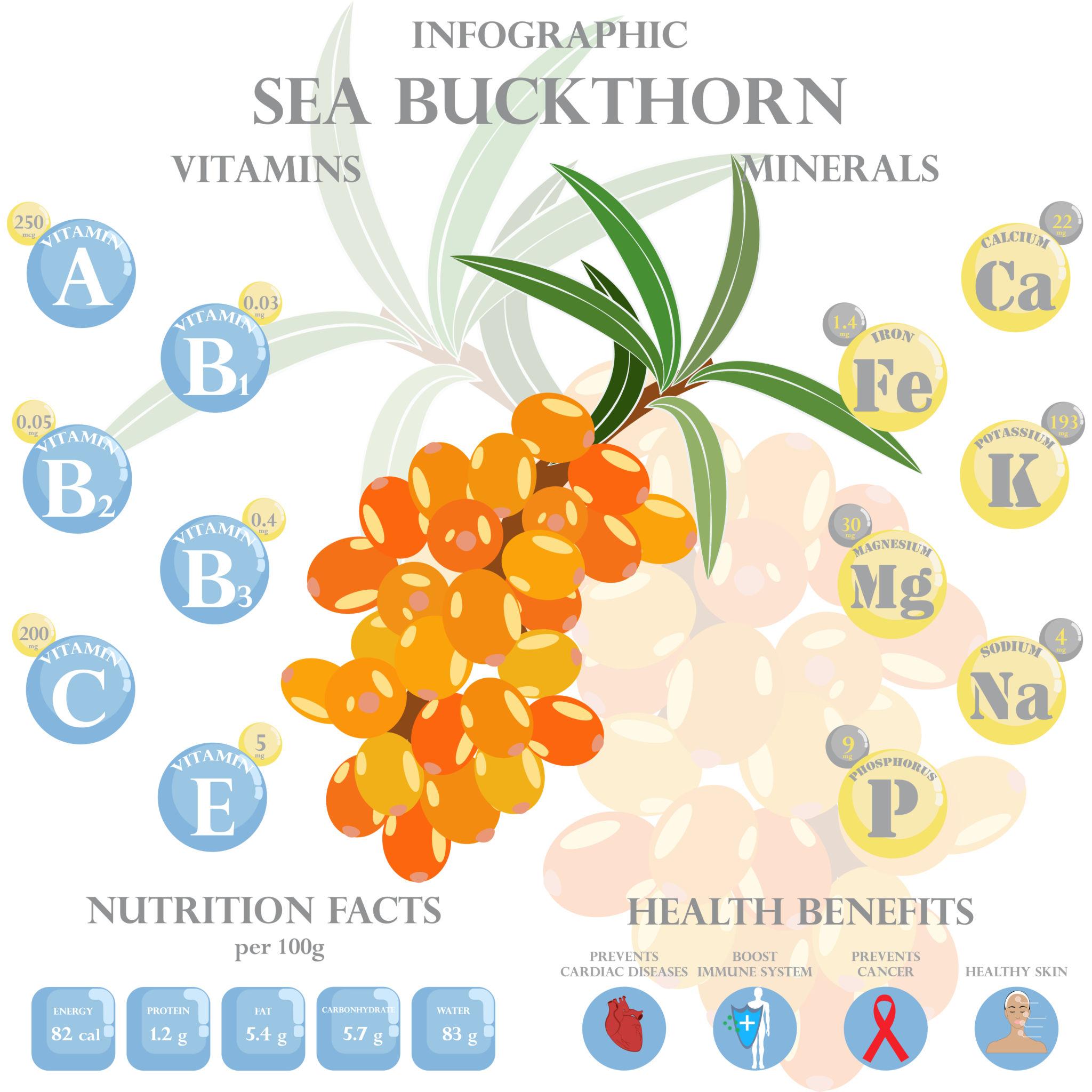
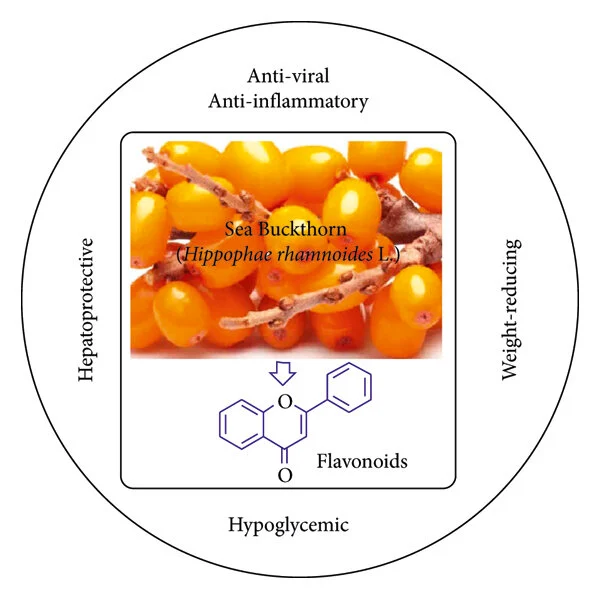
Phytochemical analyses have confirmed that Sea Buckthorn berries contain a complex matrix of antioxidants, fatty acids and micronutrients that contribute to their biological activity.
Unique Fatty Acid Profile
One of the most distinctive characteristics of Sea Buckthorn is its rare combination of essential fatty acids.
Unlike most plant sources, Sea Buckthorn naturally contains Omega-3, Omega-6, Omega-7 and Omega-9 within the pulp and seed oil fractions.
Omega-7 (palmitoleic acid) is particularly notable because it is rarely found in plant sources and has been studied for its role in skin and metabolic health.
Nutritional Density
Sea Buckthorn berries contain both water-soluble and lipid-soluble nutrients, which contributes to their unique nutritional profile.
Key nutrients identified include:
• Vitamin C
• Vitamin E (tocopherols and tocotrienols)
• Carotenoids
• Flavonoids
• Polyphenols
• Essential fatty acids
Antioxidant Mechanism
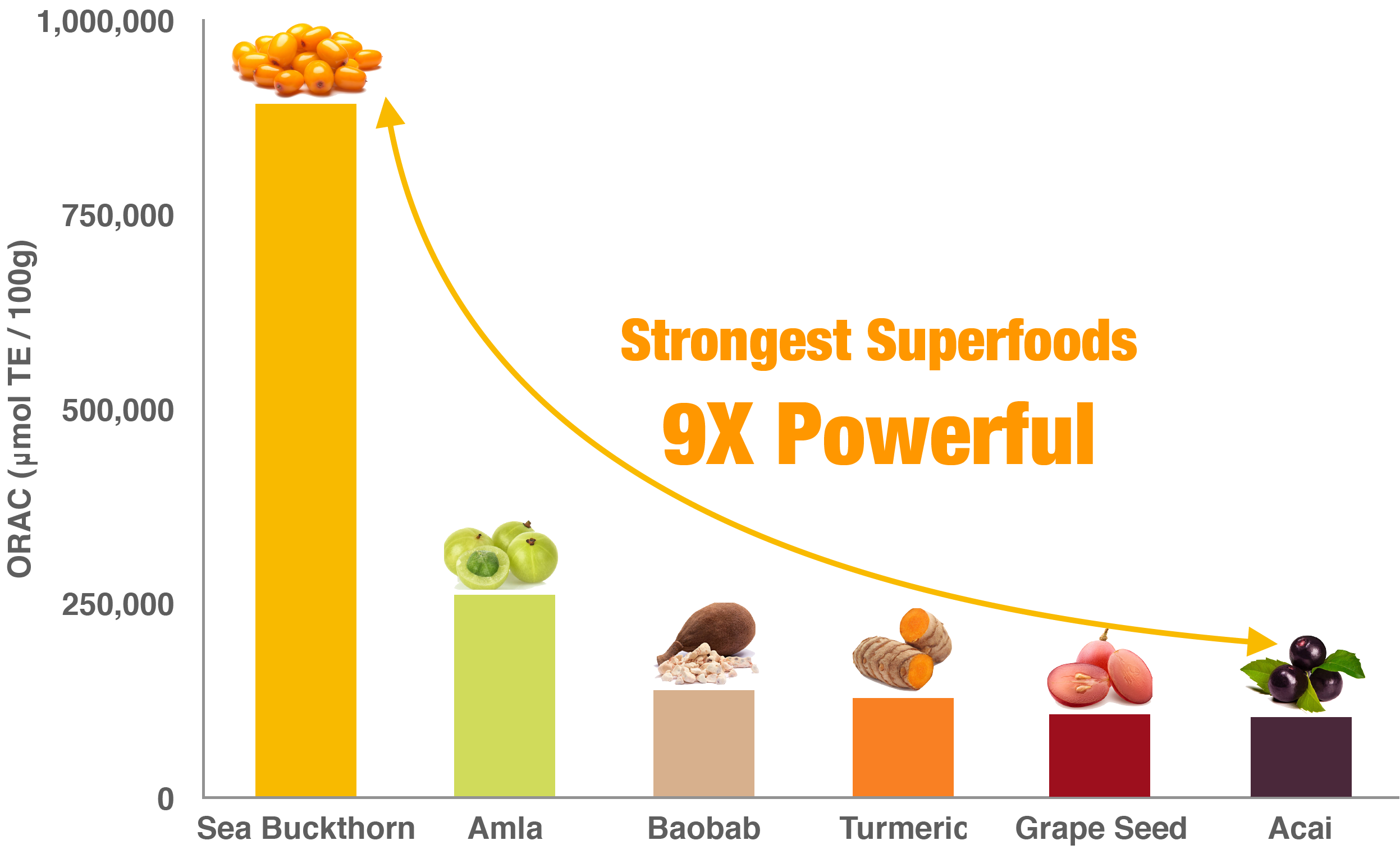
The antioxidant activity of Sea Buckthorn is primarily attributed to its high concentration of polyphenols and carotenoids.
These compounds help neutralise free radicals and reduce oxidative stress within biological systems.
Geographic Source and Nutrient Concentration
Environmental conditions influence the phytochemical composition of Sea Buckthorn.
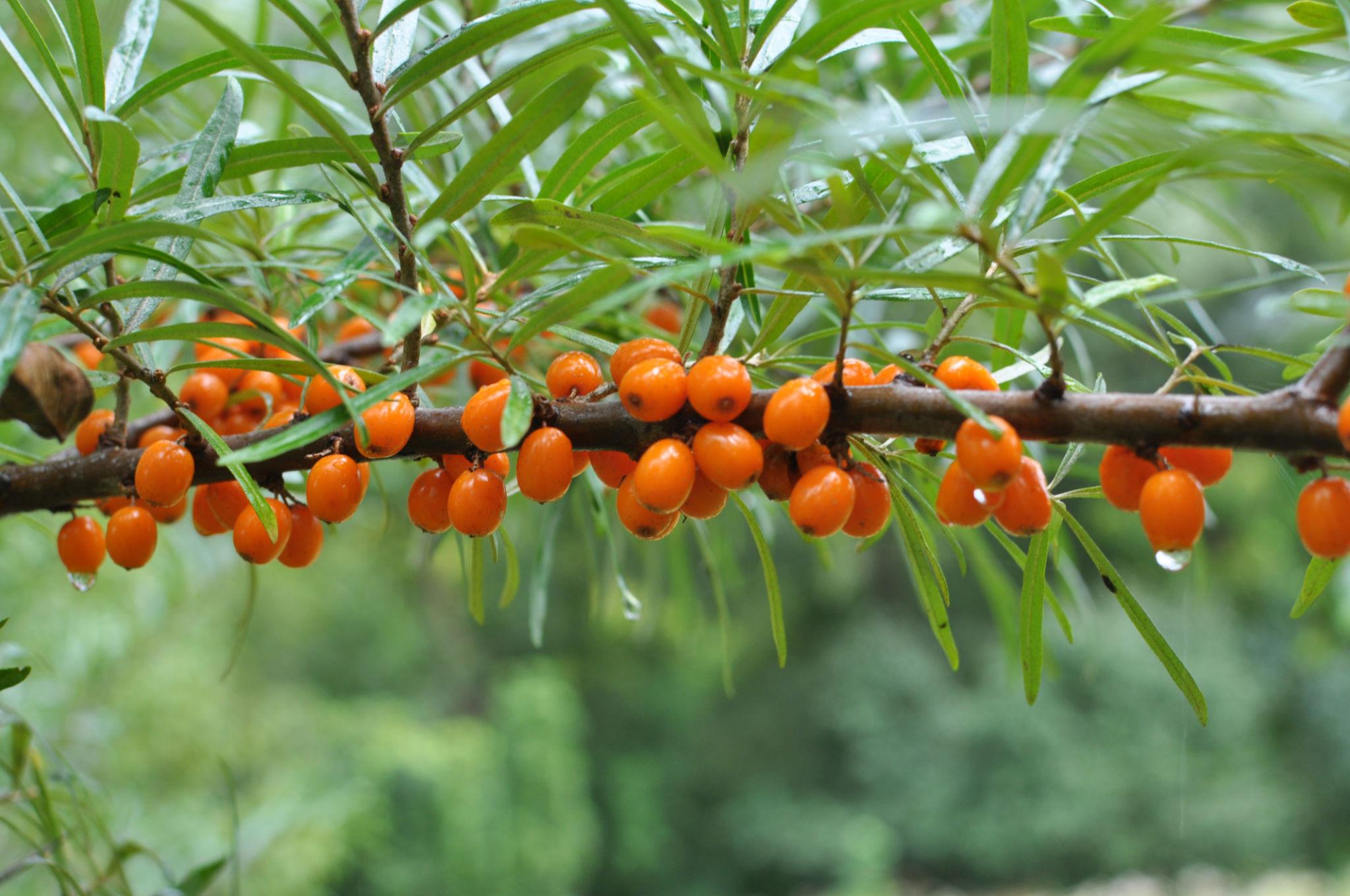
High-altitude growing regions such as the Tibetan Plateau are often associated with increased concentrations of protective phytochemicals due to stronger ultraviolet radiation and harsher environmental conditions.
Global Scientific Research on Sea Buckthorn
Sea Buckthorn has been studied extensively across different regions of the world due to its exceptional nutritional composition and resilience in extreme climates. Research institutions across Europe, China, Russia and Central Asia have conducted phytochemical and nutritional studies to understand the biological properties of Hippophae rhamnoides L.
Several studies highlight the presence of polyphenols, carotenoids, vitamins and essential fatty acids that contribute to its antioxidant activity and nutritional significance.

Related Research Articles
Sea Buckthorn Benefits – Antioxidant Superfruit Rich in Omega 3 6 7 9
Zielinska A. et al., Abundance of Active Ingredients in Sea Buckthorn Oil, Molecules.
Wang Z. et al., Sea Buckthorn in Nutrition and Health, Frontiers in Nutrition.
Suryakumar G., Medicinal and Therapeutic Potential of Sea Buckthorn, Journal of Ethnopharmacology.
Li T. et al., Bioactive Compounds and Health Benefits of Sea Buckthorn, Food Chemistry.