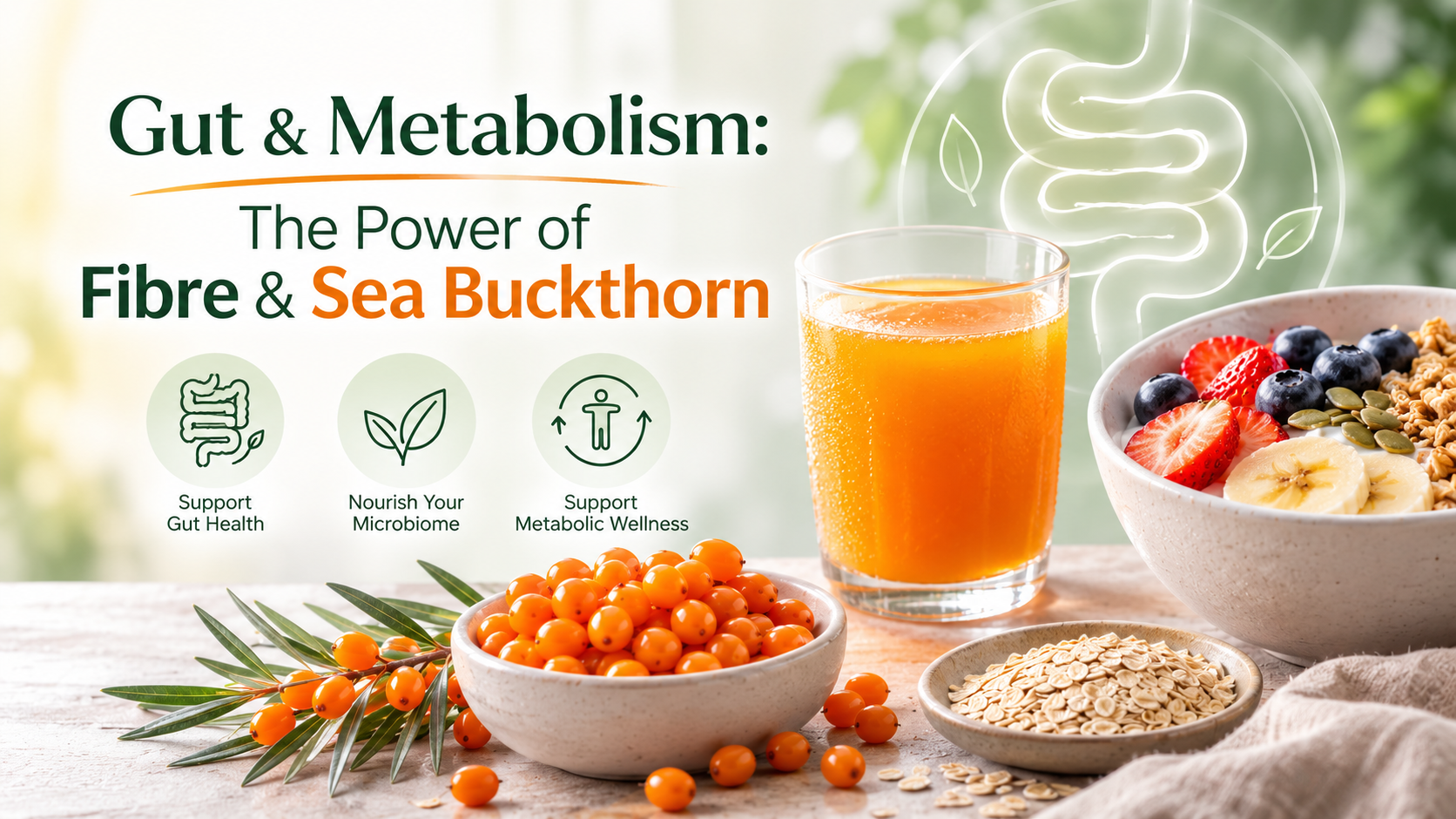
Have you ever wondered why some foods leave you feeling energised and satisfied, while others seem to bring on an energy slump soon after?
The answer may go beyond calories alone.
Growing research is uncovering an important connection between our gut and metabolic health — including the way our body processes carbohydrates, fats and energy.
At the heart of this connection is the gut microbiome: the vast community of microorganisms living within our digestive system.
And what we feed these microorganisms matters.
Nutrients such as soluble fibre and resistant starch help nourish the gut environment, while nutrient-rich plant foods such as Sea Buckthorn provide a diverse spectrum of bioactive compounds that are increasingly being studied for their relationship with gut and metabolic wellness.
Your Gut Does More Than Digest Food
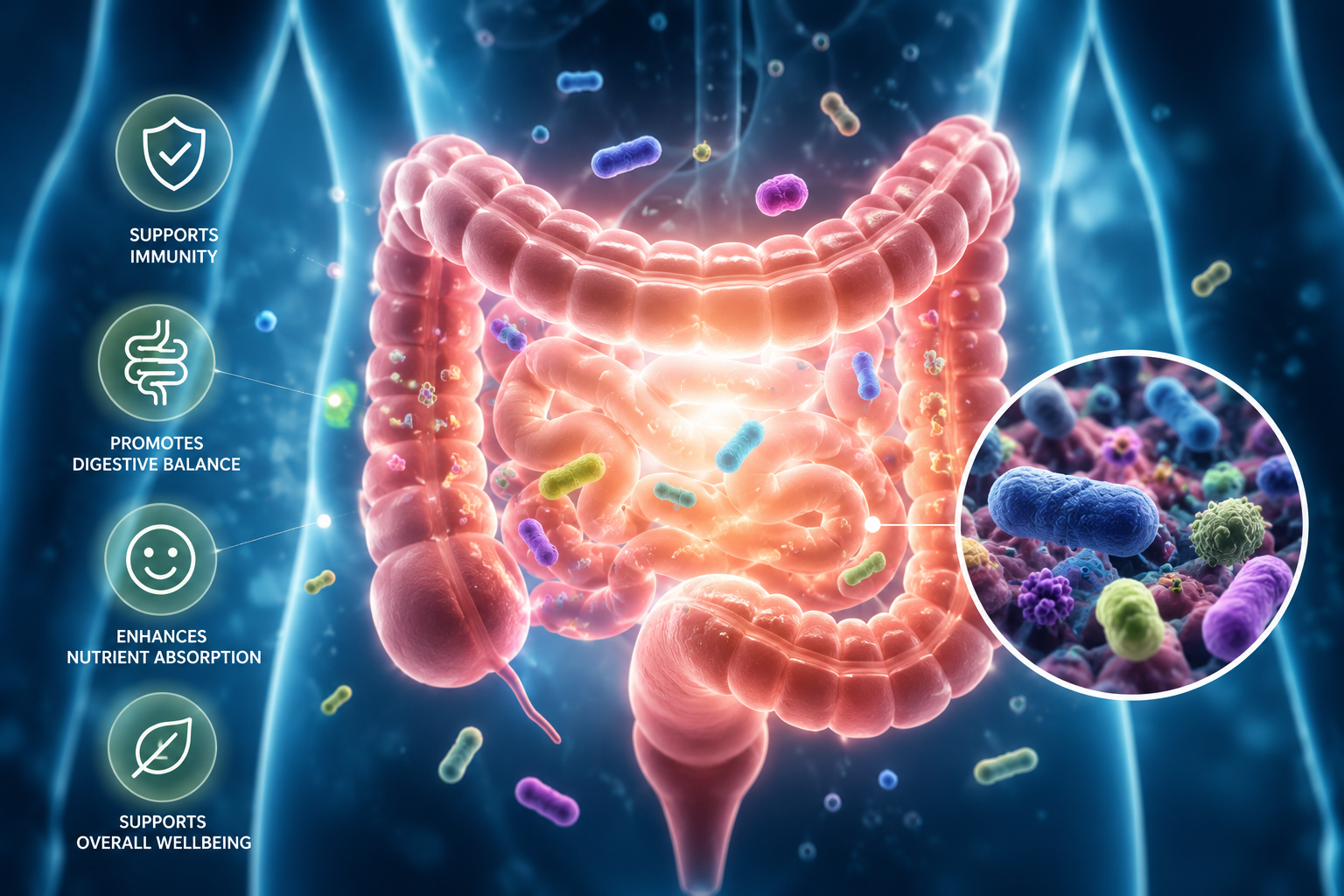
Our digestive system is home to trillions of microorganisms that interact continuously with the foods we eat.
Certain carbohydrates and fibres aren't completely broken down before reaching the large intestine. Once there, they can be fermented by gut bacteria to produce compounds known as short-chain fatty acids (SCFAs).
One of the most widely studied is butyrate.
Butyrate provides energy to the cells lining the colon and is an important part of maintaining a healthy intestinal environment.
This gives us a simple but important way of looking at nutrition:
What we eat doesn't just feed us — it also feeds our gut microbiome.
And that can have effects that extend beyond digestion.
Soluble Fibre: Supporting the Gut & Metabolism
We often associate fibre with digestive regularity, but its role in the body goes much further.
Soluble fibre interacts with water in the digestive system. Certain types form a gel-like substance that can help slow digestion and nutrient absorption, while fermentable soluble fibres provide nourishment for gut microorganisms.
This means soluble fibre can support several aspects of metabolic wellness, including:
- healthy digestion
- a favourable gut environment
- a more gradual absorption of carbohydrates
- healthy glucose metabolism
- healthy cholesterol management
Human clinical research has demonstrated the potential of soluble fibre to support important markers of glucose regulation. A systematic review and meta-analysis involving 29 randomised controlled trials and more than 1,500 participants found improvements across several measures of glycaemic control with soluble fibre supplementation.¹
So fibre isn't simply about digestion.
It's an important part of the gut–metabolism connection.
Resistant Starch: Feeding the Good in Your Gut
Another fascinating component of this story is resistant starch.
Most starch is digested and converted into glucose in the small intestine.
Resistant starch behaves differently.
As its name suggests, it resists digestion in the small intestine and continues into the large intestine, where it becomes available for fermentation by gut microorganisms.
During this process, bacteria can produce SCFAs — creating another important link between the foods we eat and our intestinal environment.
Clinical research has shown that diets enriched with resistant starch can change the composition and activity of the gut microbiome and influence the production of SCFAs.²
Where Do We Find Resistant Starch?
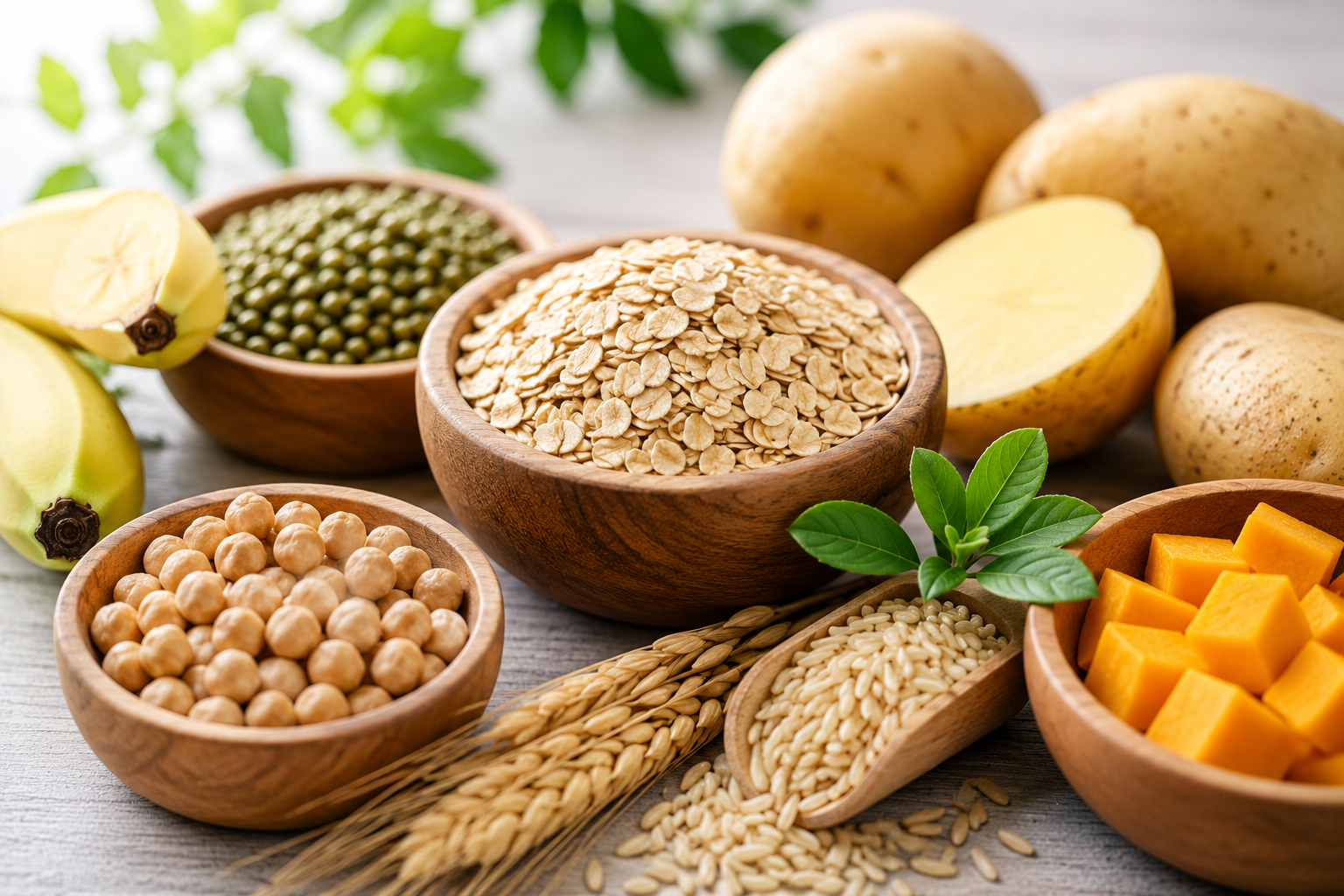
Resistant starch occurs naturally in foods such as:
- green bananas
- beans and legumes
- oats and selected whole grains
- cooked and cooled potatoes
- cooked and cooled rice
Including a variety of fibre-rich foods in our diet therefore helps provide different forms of nourishment for our gut microorganisms.
But fibre and resistant starch are only part of the story.
Plants also provide an extraordinary range of bioactive compounds — and this is where Sea Buckthorn becomes especially interesting.
Sea Buckthorn: Bringing Bioactive Nutrition Into the Gut–Metabolism Story
With its distinctive bright orange berries, Sea Buckthorn (Hippophae rhamnoides) has a long history of nutritional use across parts of Asia and Europe.
Today, modern nutritional research is helping us understand why this remarkable berry has attracted so much attention.
Sea Buckthorn naturally provides a diverse combination of nutrients and plant bioactives, including:
Polyphenols • Carotenoids • Phytosterols • Fatty Acids • Vitamins & Other Phytonutrients
Rather than working in exactly the same way as resistant starch, these compounds provide a complementary nutritional pathway within the gut–metabolism relationship.
Researchers are increasingly exploring how Sea Buckthorn and its naturally occurring bioactives interact with gut microorganisms, lipid metabolism, energy metabolism and post-meal metabolic responses.
Sea Buckthorn & the Gut Microbiome: What Human Research Shows
One particularly interesting human study followed 56 participants who consumed Sea Buckthorn berry puree daily for 90 days.
Researchers examined both their gut microbiota and metabolic profiles.
Following the Sea Buckthorn intervention, researchers observed changes in the composition of the gut microbiome, including enrichment of butyrate-producing bacteria and microorganisms associated with lipid metabolism, including Faecalibacterium and Prevotella.³
This is particularly noteworthy because butyrate-producing bacteria are an important part of the intestinal ecosystem.
Researchers also identified changes in several metabolic markers over the intervention period, providing further insight into the relationship between Sea Buckthorn, the gut microbiome and energy metabolism.³
These findings suggest an exciting connection:
Sea Buckthorn Bioactives → Gut Microbiome → Metabolic Wellness
It shows us that the nutritional value of Sea Buckthorn may go beyond simply looking at individual vitamins or nutrients.
Its naturally diverse combination of bioactive compounds may interact with the wider gut ecosystem — an area that continues to attract scientific interest.
Sea Buckthorn & Healthy Lipid Metabolism
Sea Buckthorn has also been studied in relation to lipid metabolism, another important component of metabolic wellness.
A systematic review and meta-analysis bringing together 15 randomised controlled studies found that Sea Buckthorn supplementation influenced several circulating lipid markers.⁴
Across the studies, researchers reported:
↓ Triglycerides
↓ Total cholesterol
↓ LDL cholesterol
↑ HDL cholesterol
These findings support the growing scientific interest in Sea Buckthorn and its potential role in supporting healthy lipid metabolism as part of a balanced nutritional approach.
Importantly, rather than relying on the findings of a single study, this analysis brought together evidence from multiple randomised controlled trials — strengthening our understanding of Sea Buckthorn's relationship with metabolic health.
What Happens After We Eat? Sea Buckthorn Research Goes Further
Metabolic wellness isn't only about what happens when we haven't eaten.
How our body responds after a meal matters too.
This is known as the post-meal, or postprandial, metabolic response.
In a randomised controlled crossover study, researchers examined Sea Buckthorn as part of a sucrose-containing meal.
Sea Buckthorn was found to decrease and delay the insulin response and improve the glycaemic profile following the meal compared with the control.⁵
This gives researchers another interesting perspective on Sea Buckthorn — not only in relation to its nutritional composition, but also how consuming the berry may influence the body's metabolic response to food.

Fibre + Resistant Starch + Sea Buckthorn: Different Roles, One Bigger Picture
So how do all three fit together?
They don't need to perform the same function to be valuable.
In fact, their different nutritional roles are exactly what makes the combination interesting.
Soluble Fibre
Supports digestive health, healthy nutrient absorption and provides fermentable material for beneficial gut microorganisms.
Resistant Starch
Travels into the large intestine where gut microorganisms can ferment it, contributing to the production of metabolites such as SCFAs.
Sea Buckthorn
Provides a rich spectrum of naturally occurring plant bioactives and has been clinically investigated for its relationship with gut microbiota, lipid metabolism and post-meal metabolic responses.
Think of it as supporting the body from different nutritional angles:
Nourish the gut → Support the microbiome → Provide plant bioactives → Support metabolic wellness
Feed Your Gut. Support Your Metabolism.
Metabolic wellness isn't about avoiding one particular food or searching for one "miracle" ingredient.
It's about creating a better nutritional environment for the body.
A diverse, plant-rich diet containing soluble fibre and resistant starch helps nourish the gut microbiome.
Alongside this, colourful plant foods provide polyphenols, carotenoids and other naturally occurring bioactive compounds that interact with our body's complex metabolic processes.
And Sea Buckthorn brings an especially interesting nutritional profile to this picture.
With its naturally occurring fatty acids, polyphenols, carotenoids, phytosterols and other phytonutrients, together with emerging human research into its relationship with the gut microbiome, lipid metabolism and post-meal response, Sea Buckthorn represents an exciting area within modern nutritional science.
The message is simple:
Take care of your gut. Nourish your body. Support your metabolism — naturally.
References
1. Xie Y, Gou L, Peng M, et al. Effects of soluble fiber supplementation on glycemic control in adults with type 2 diabetes mellitus: A systematic review and meta-analysis of randomized controlled trials. Clinical Nutrition. 2021;40(4):1800–1810. doi:10.1016/j.clnu.2020.10.032.
2. Hald S, Schioldan AG, Moore ME, et al. Effects of Arabinoxylan and Resistant Starch on Intestinal Microbiota and Short-Chain Fatty Acids in Subjects with Metabolic Syndrome: A Randomised Crossover Study. PLoS ONE. 2016;11(7). doi:10.1371/journal.pone.0159223.
3. Dietary Supplementation with Sea Buckthorn Berry Puree Alters Plasma Metabolomic Profile and Gut Microbiota Composition in Hypercholesterolemia Population. 2022. PMID: 36010480.
4. Geng Y, Wang J, Chen K, et al. Effects of sea buckthorn (Hippophae rhamnoides L.) on factors related to metabolic syndrome: A systematic review and meta-analysis of randomized controlled trial. Phytotherapy Research. 2022;36(11):4101–4114. doi:10.1002/ptr.7596.
5. Mortensen MW, Spagner C, Cuparencu C, Astrup A, Raben A, Dragsted LO. Sea buckthorn decreases and delays insulin response and improves glycaemic profile following a sucrose-containing berry meal: a randomised, controlled, crossover study. European Journal of Nutrition. 2018;57(8):2827–2837. doi:10.1007/s00394-017-1550-8.
This article is intended for general nutritional education and wellness information.